Archive of Lost Plants
This installation is a dedication to plants that once existed - long before us. Thousands of years ago, when there were no records or testimonies, and the earth itself was the only entity capable of remembering them.
They are not preserved in catalogues or herbaria. They do not exist in any document or name. Only as intuitions, dreamlike images, echoes within landscapes - memories that can no longer be written down.
There are no biological reconstructions here. No attempt to define. Only forms that stimulate the imagination: shadows, impressions in metal, embroidery in fabric, and optical illusions. Nothing is concrete - everything is sensation.
We perceive the world not only through our eyes, but through the body, experience, and presence.
Therefore, this installation is not created for observation, but for experience.
Therefore, this installation is not created for observation, but for experience.
The aim is not to reconstruct a plant, but to create an environment in which one may ask:
What else was here before us? What does nature remember, even when we no longer can?
What else was here before us? What does nature remember, even when we no longer can?
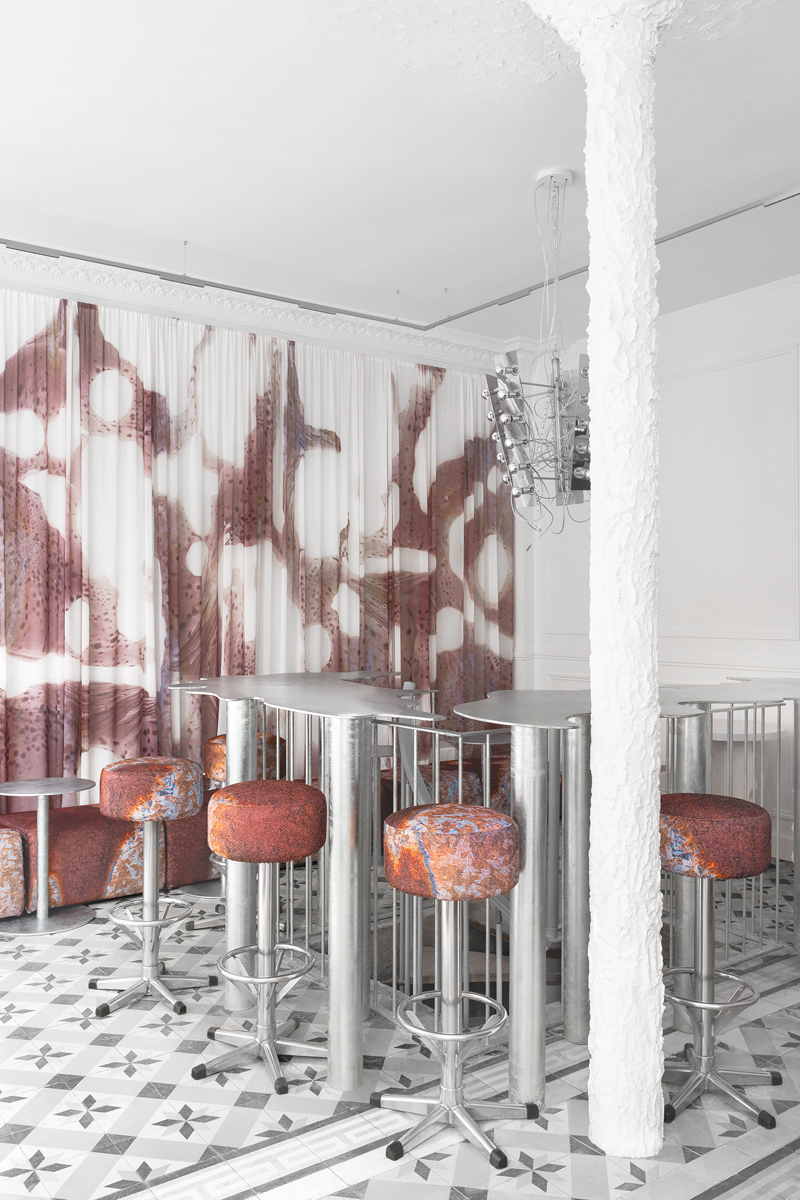
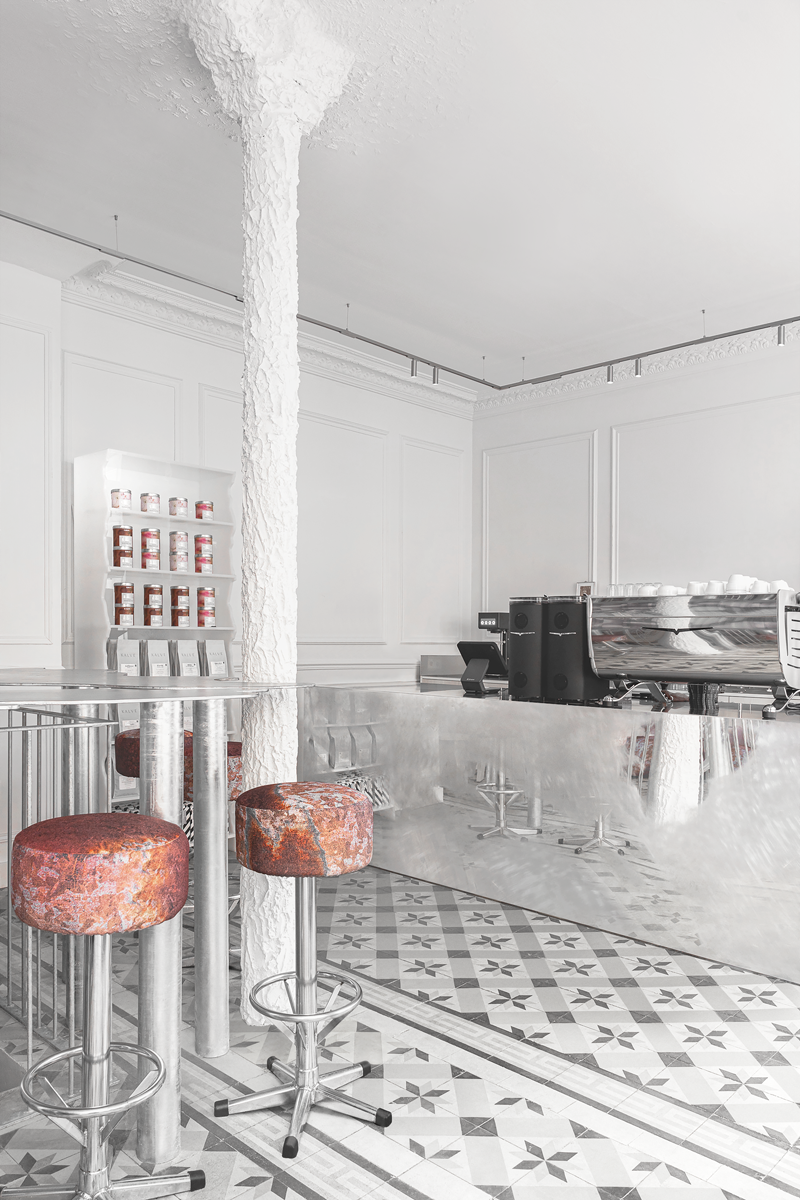
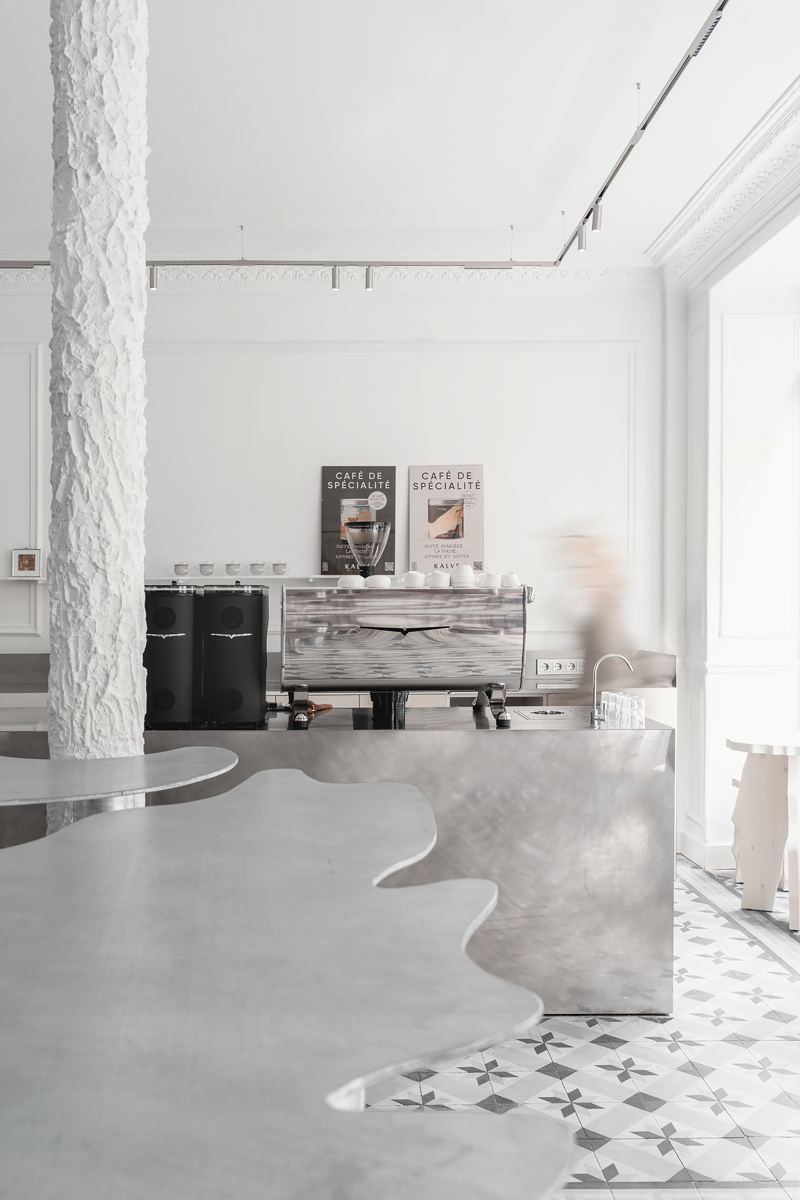
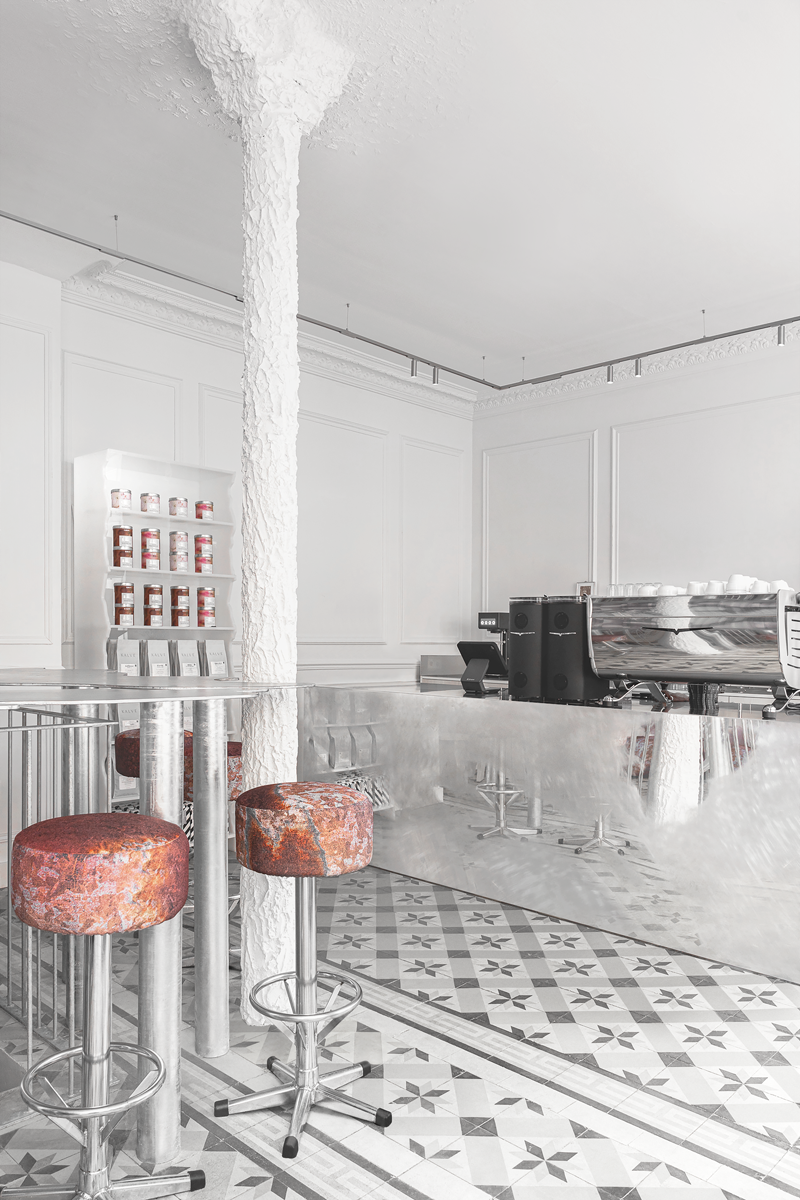
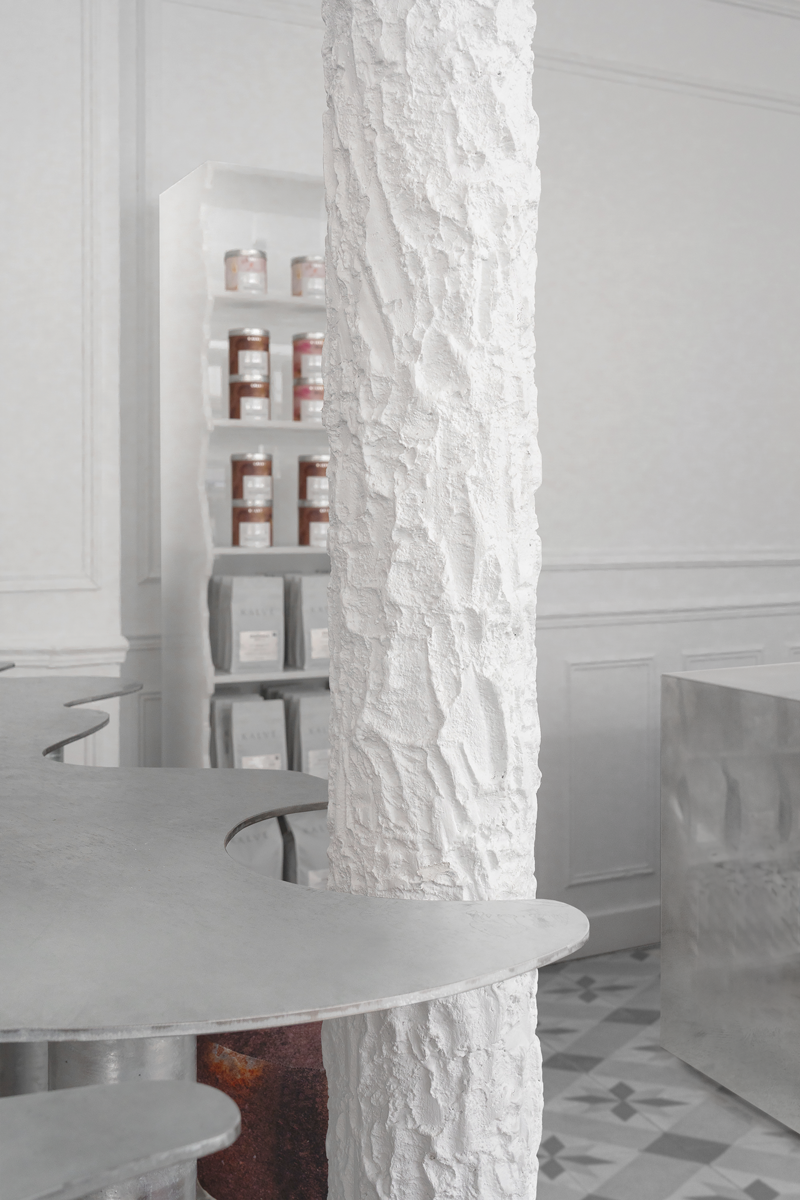
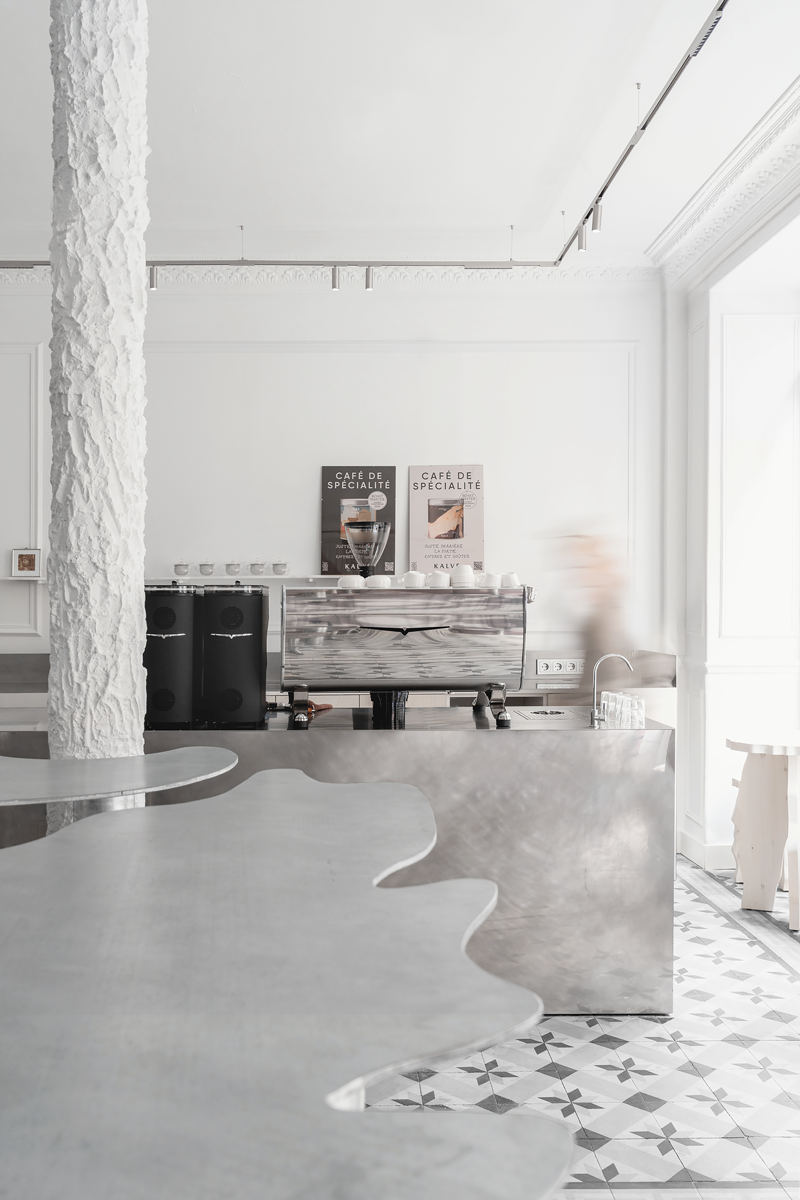
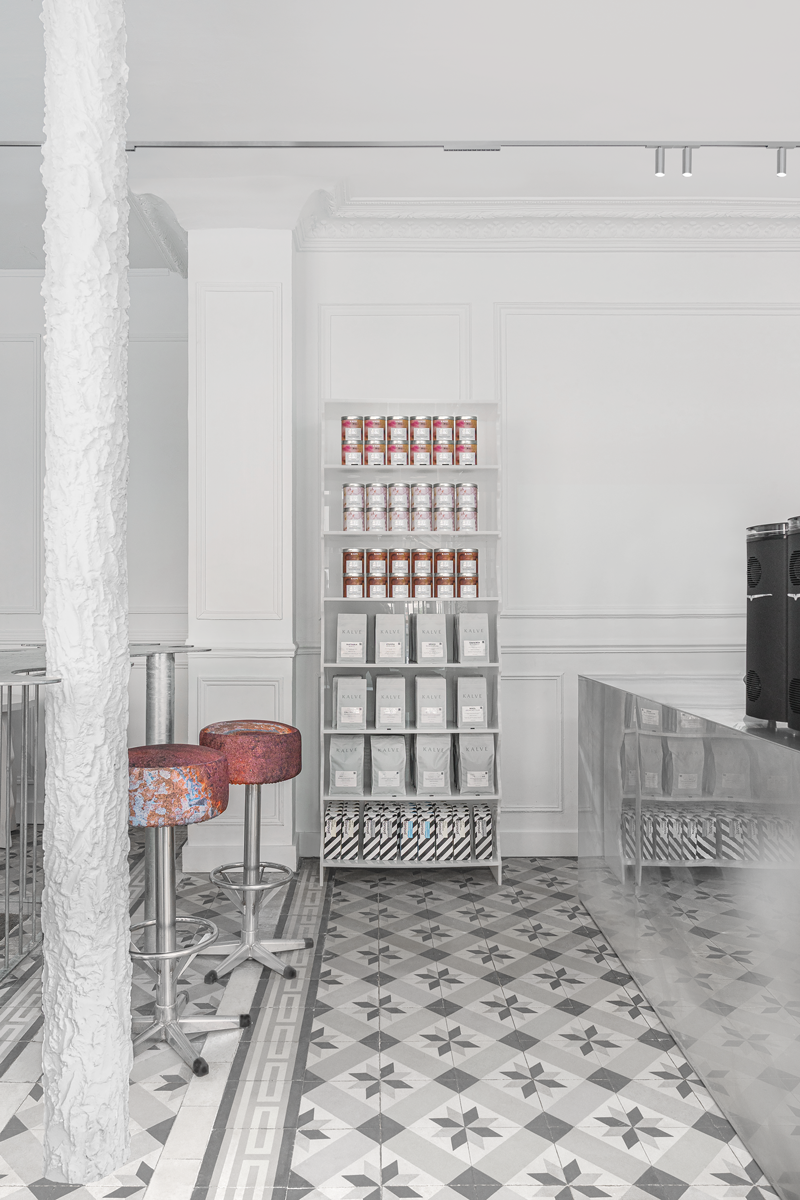
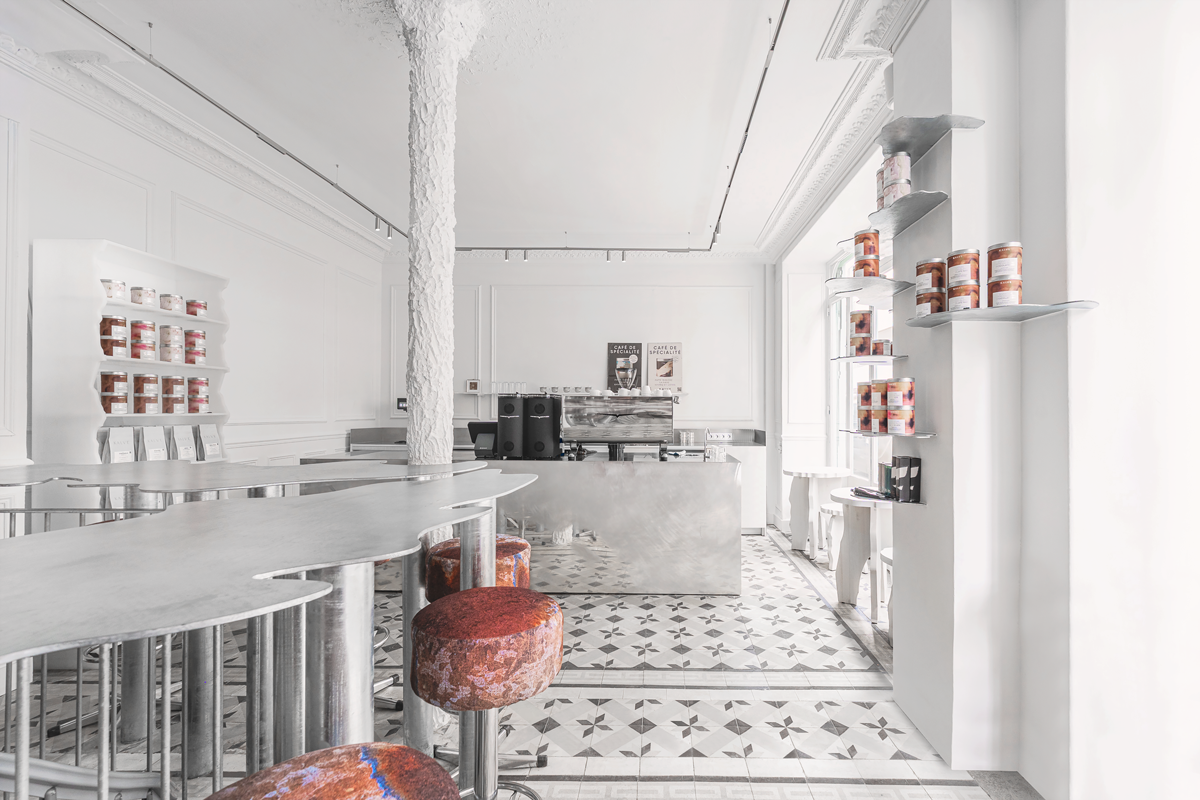
The interior design is conceived as a dialogue between the building’s historical architecture and a contemporary aesthetic. Classical detailing - wall panels, ceiling cornices, and spatial proportions - creates a peaceful background against which the sculptural elements stand out in the foreground.
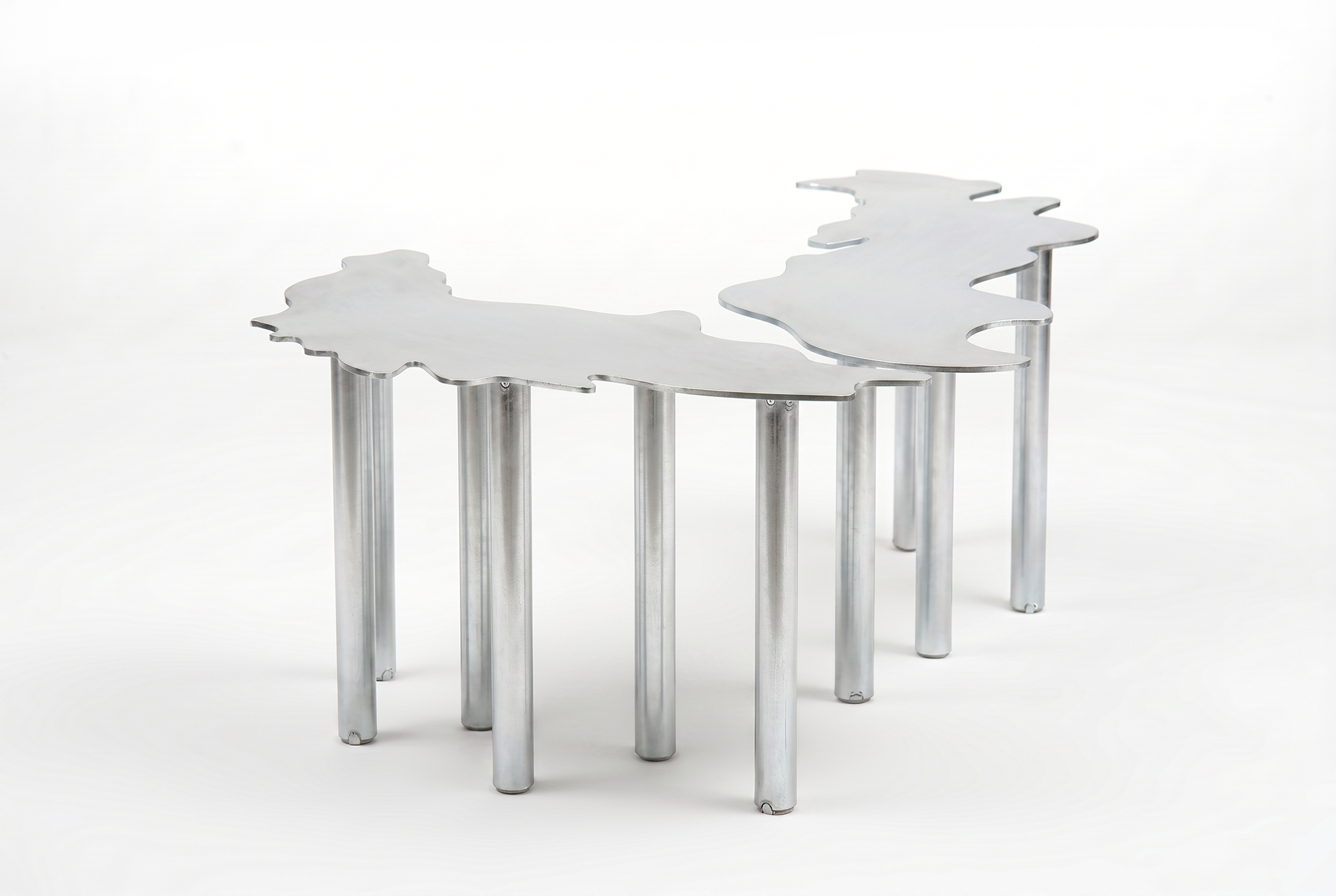
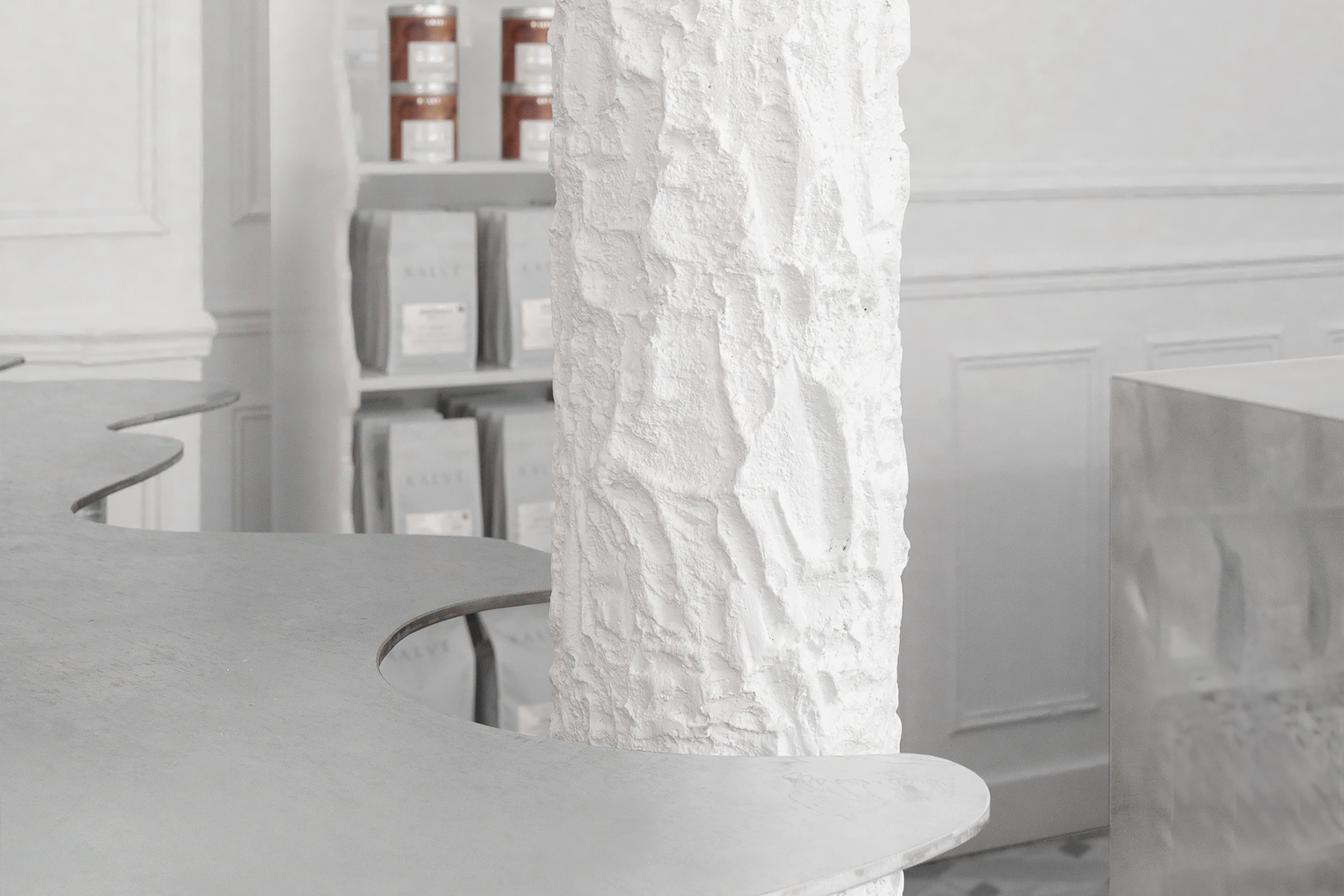
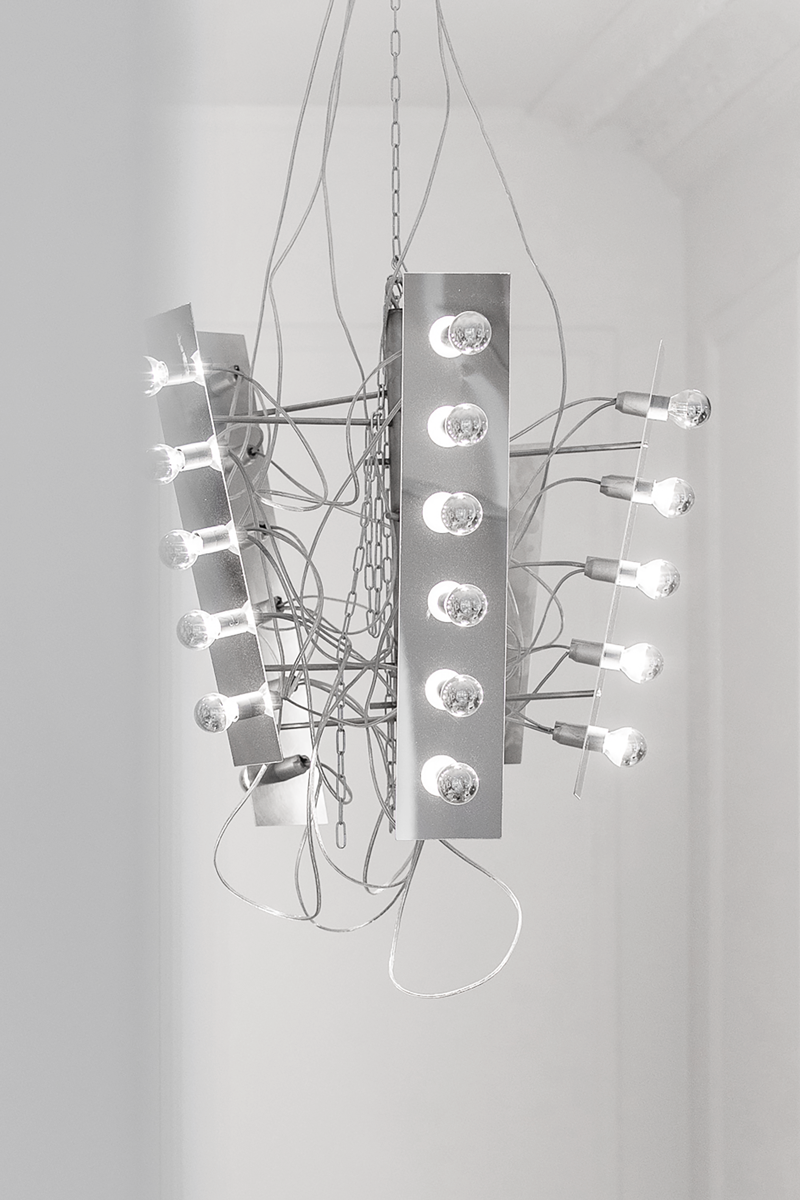
All metal components within the space were fabricated according to the designers’ drawings, in collaboration with metal artist Edgars Spridzāns, emphasizing craftsmanship, process, and material honesty. Metal is neither concealed nor idealized; visible traces of fabrication become a conscious part of the design language.
During the reconstruction, the original historic floor was uncovered and preserved, having previously been concealed, and now forms one of the key layers of the interior. The original wall panels were also retained, allowing the space to preserve its architectural memory and traces of time. New elements are not imposed, but carefully integrated into the existing structure.
The interior strikes a balance between technical clarity and a tactile experience. Cool metal surfaces contrast with the textures of the seating, whose surfaces recall oxidized metal, introducing an organic, almost accidental dimension into the space. Semi-transparent textiles with abstract patterns soften the spatial perception, adding depth and movement.
The tactile language of the interior refers to processes of natural evolution, where structures are shaped by moss, fungi, bacteria, and microorganisms. The surfaces of the seating evoke traces of long-term growth, erosion, and transformation, as if they had formed slowly, without human intervention. These textures do not imitate a specific material; instead, they reflect nature’s ability to accumulate time and experience in layers. They soften the space and introduce a sense of movement that is not mechanical, but alive.